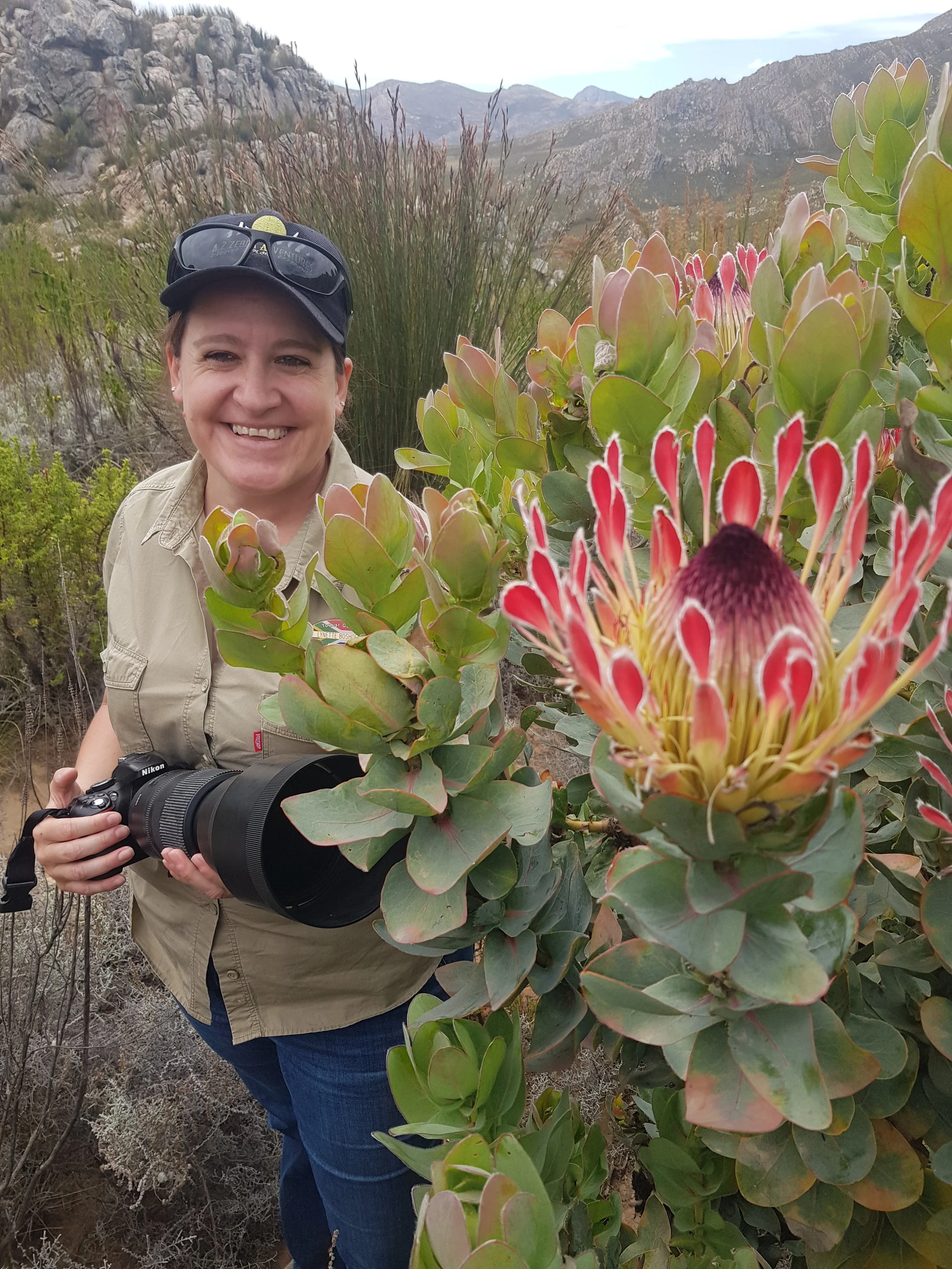
Lynette Boshoff
Lynette Boshoff's childhood moved around: Komga, Johannesburg, Oudtshoorn. She and her siblings packed picnics and vanished into the ‘veld’, or climbed the huge avocado tree in the garden until someone called them back in. Family holidays meant the Kruger, a caravan hitched and ready, the family moving from reserve to reserve at the pace of whatever was happening outside the window. For two years of school, the family lived on a farm high in the Outeniqua Mountains, surrounded by raw Fynbos, and she helped her father plant and harvest potatoes and cabbages in the kind of upbringing a teenager rarely appreciates at the time. She'd have preferred to be with her friends, whereas now she now recognises it for what it was.
There was an earlier moment, on that same farm, that captures something about her. The family had come up for a holiday years before they moved there, and she and her cousins set out to find the source of the river behind the farm. They waded upstream for hours, climbing over rocks, convinced they were covering serious ground, until they hit a three-metre waterfall that felt, to a child, impossibly high. They turned back, certain they'd walked twenty kilometres. It was probably closer to one, and nowhere near the source. For Lynette, the impulse behind it - to keep going, to see what's further up, has never really left her.
After school she went into the corporate world, and stayed longer than she intended. She was good at it, and she learned things there she still uses: how to run a business, how to deal with people, how to hold things together when they're under pressure. But something didn't fit, and it was never something she loved. Every other year she drove to the Kruger and felt it lift. Every time she drove home, the weight returned, growing heavier the closer she got to Johannesburg. In 2017, on one of those return journeys, she made a decision. She was going to stop chasing money and start chasing the thing she'd always wanted.
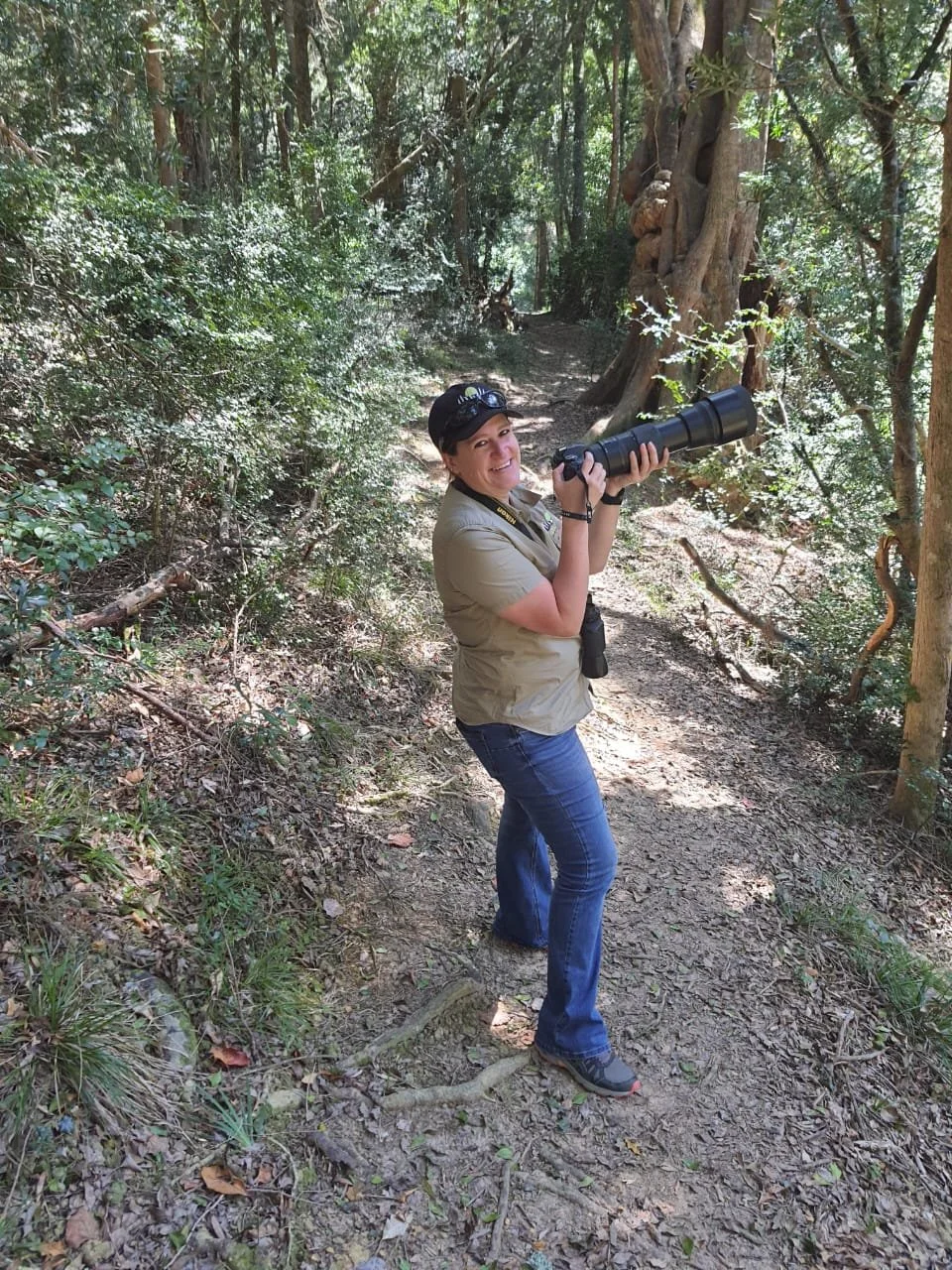
That same year she bought her first camera. Back home, editing photographs from a recent trip, she realised she couldn't name a single bird she'd shot. The research that followed changed the direction of her life. A birder was born, more or less on the spot. She enrolled in her FGASA qualification part-time while still working, met a fellow birding enthusiast along the way who taught her a great deal about species identification on weekends spent in the field, cameras in hand, and finished second in her class. By early 2019 she was guiding at a lodge in the Greater Kruger. In 2020 she began guiding her own guests.
Lynette is now a qualified NQF4 Field and Cultural Guide, birding specialist and nature photographer. She guides across the Western Cape: the Karoo scrublands, the Garden Route forests, the wetlands and coastline, with particular depth in the ecosystems where Fynbos, Succulent Karoo, Karoo Scrubland, and Subtropical Thicket converge into some of the region's most exceptional biodiversity. She knows the endemics and the sought-after species: the Knysna Turaco, the Narina Trogon, the African Finfoot. She also knows that the best guiding rarely starts with a species list. Through her guests, she extends beyond birding into guided hikes, night walks and stargazing sessions, different entry points into the same landscapes, for guests who want to experience a place rather than simply pass through it.
Her approach is unhurried and observational. She has sat with guests watching two resident meerkat families fight a territorial battle - babies included - for longer than anyone planned, and nobody suggested moving on. She has stood quietly setting up a telescope for an evening stargazing session when a Spotted Eagle Owl swept in and settled on the pole directly above her, and the two of them simply looked at each other for a while. She spent a December morning with photographer guests staking out a pair of Knysna Turacos building a nest, all of them waiting for the moment one spread its wings, and she still isn't sure who got the better shot. These are the moments, she'll say, that remind her why she loves the wilderness.
Owls, Lynette always mentions, are her soul animal. The sight or sound of one still makes anyone smile. Beyond that, her philosophy is straightforward: slow down, look at what's actually there, taste the Spekboom, watch the bees, smell the flowers. Everything has its place. Leave nature the way you found it.
Guides in: South Africa
Specialities: ornithology, bird photography, stargazing
Languages: English, Afrikaans
Daily Guiding Fee: $$