
Family Safari With a Private Guide: How It Works, What It Costs, and Why It Changes the Trip
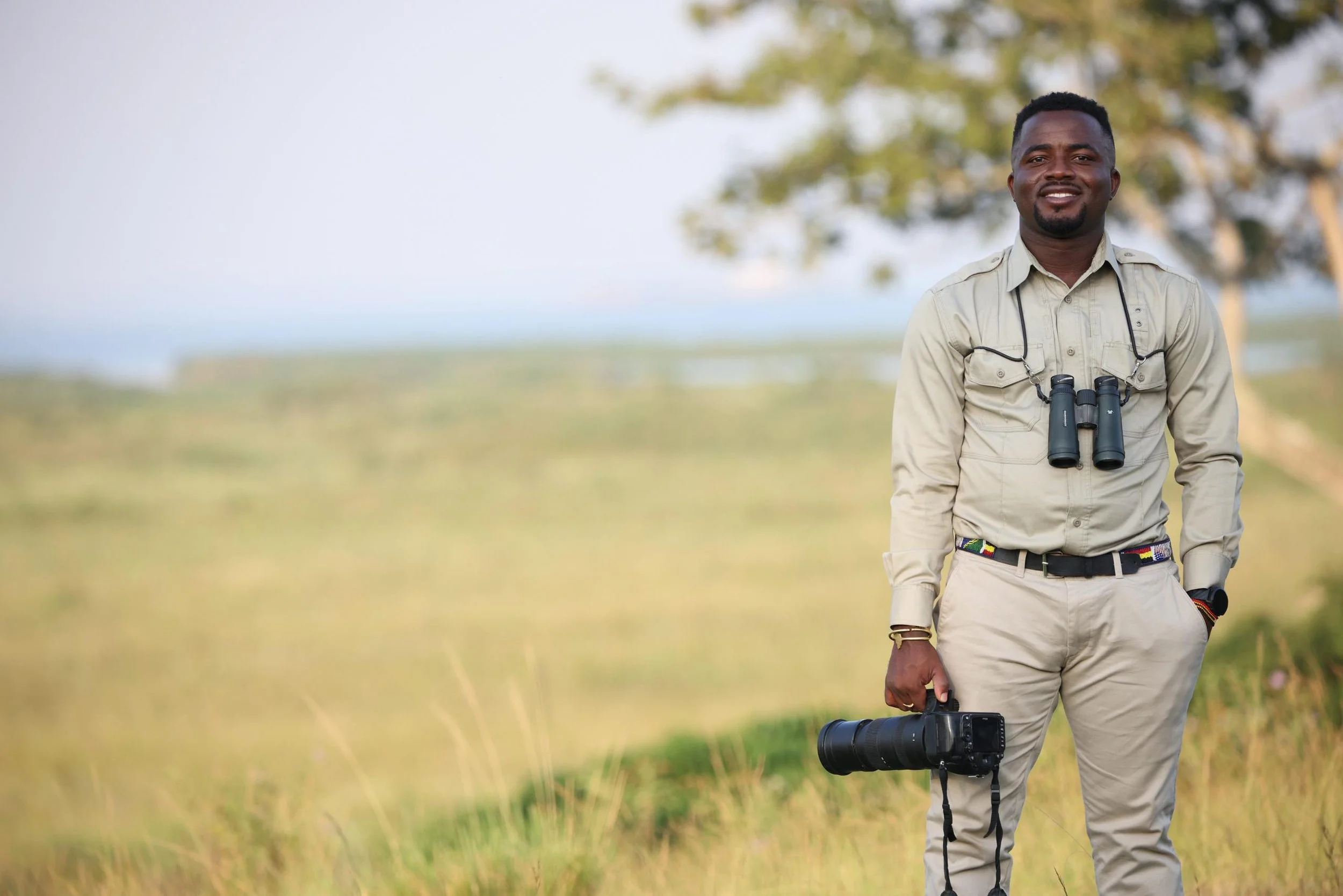
A private guide on a family safari is one professional who travels with your family for the entire trip, rather than a new camp guide at every stop, and typically costs $100 to $1,000+ a day depending on their experience and specialism. For families, that single decision, who is in the vehicle with you, usually matters more than which camps you choose, because it means the days can be built around your children instead of around a camp's fixed timetable.
What is a private safari guide?
A private safari guide is an independent professional you book for your entire trip. They meet you on arrival, travel with you between camps, destinations and countries, and guide every activity along the way.
This is different from a camp guide. Camp guides are employed by an individual lodge and are excellent within their own area, but they change every time you move, and they are shared between guests on a shared vehicle unless you pay for exclusivity. A private guide is yours from the first morning to the last.
For families, this is not a small add-on. It is the whole trip.
Why families in particular benefit from a private guide.
Children do not run on a safari timetable. Most camps operate a fixed rhythm: an early game drive, a long quiet middle of the day, an afternoon drive and sundowners. That routine is well suited to adults and awkward for a five-year-old. A private guide can:
Move the day around your children. A later start after a bad night. A short drive instead of a long one. Breakfast in camp rather than in the bush. None of this requires negotiating with a lodge.
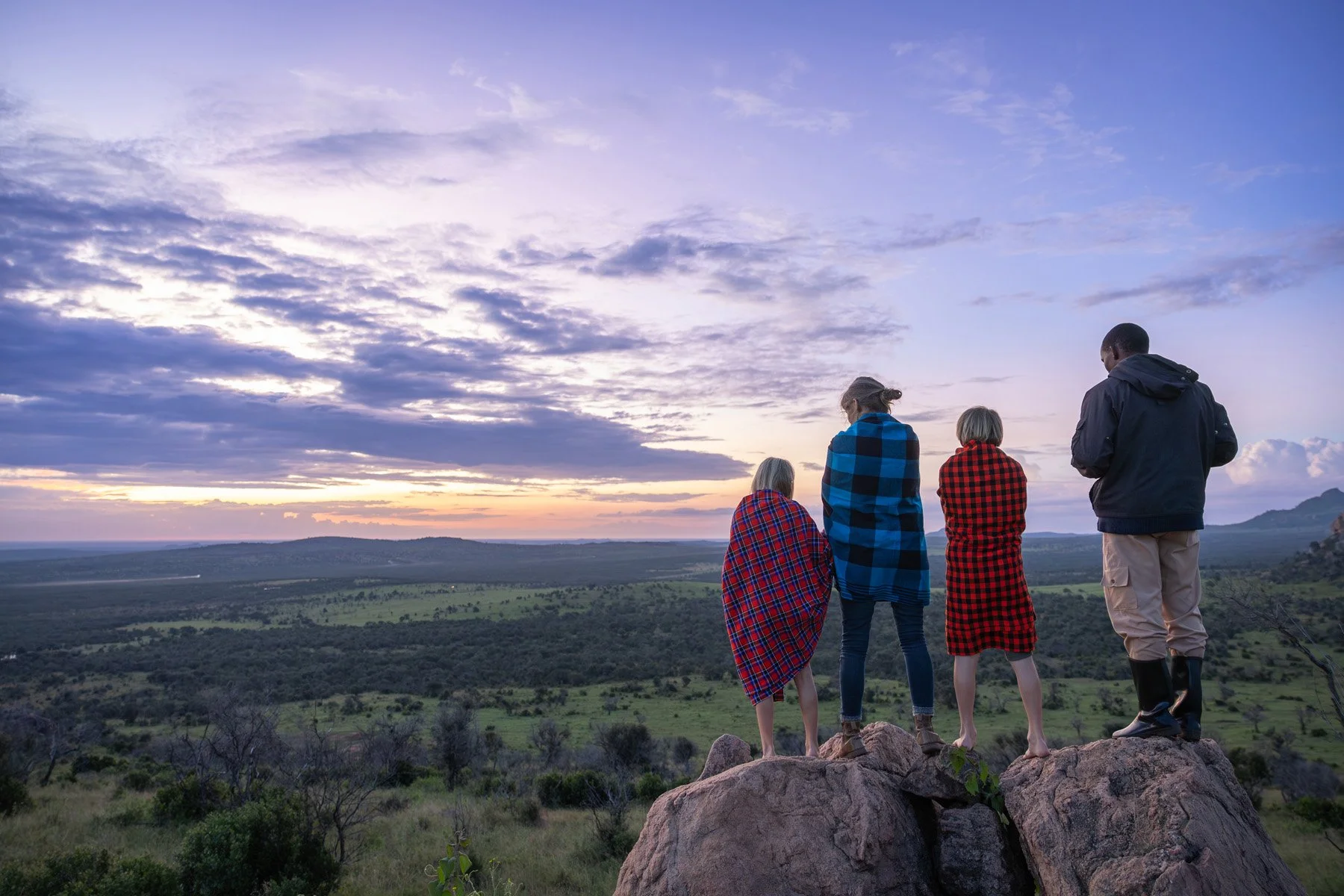
Split the group. This is the single biggest advantage on a multigenerational trip. Teenagers want to track on foot; grandparents want a slow drive and a good bird list; a toddler needs a nap. With a private guide plus a second guide and vehicle, the family can split for a morning and reconvene for lunch, instead of every activity being a compromise nobody chose.
Pitch the interpretation to the child in front of them. A good family guide teaches a seven-year-old to read dung and tracks, and simultaneously has a serious conversation with a fifteen-year-old about predator ecology. That is a specific skill, not a general one.
Carry continuity across countries. On a trip that runs Kenya to Tanzania, or Kenya to Rwanda, the private guide is the one constant. Children who take three days to warm up to an adult get one adult for the whole journey, not four.
The Safari Series / Silverless
What age can children go on safari?
There is no single answer, but there are useful markers.
Under 4: Possible, and increasingly common, but it needs the right property. Look for exclusive-use camps, private houses or conservancies rather than busy national parks. Long game drives are not realistic; short outings and time in camp are.
Ages 5 to 8: A very good age. Curiosity is high, attention spans are short, and the trip should be built in shorter bursts with plenty of camp time. Walking, tracking, insects, birds and dung beetles hold this age better than a four-hour search for a leopard.
Ages 9 to 13: Old enough for longer drives and walking safaris, young enough to be genuinely amazed. Photography, tracking and conservation projects all land well.
14 and over: Nearly everything opens up, including most walking safaris and gorilla trekking.
A firm rule worth planning around: gorilla trekking in both Rwanda and Uganda has a minimum age of 15. If your family includes younger children and gorillas are on the list, you will need to plan childcare and a parallel activity for that day, or leave the trek for a later trip.
Individual camps also set their own minimum ages, commonly 6, 8 or 12, and walking safaris usually have a minimum of 12 to 16 depending on the country and the operator. Exclusive-use properties are almost always more flexible than shared camps.
Safari Nannies: the option most families do not know exists.
Alongside our guides, APGN offers Safari Nannies: experienced childcare professionals trained in paediatric first aid, well travelled on both land and air, and equipped with the toys, books and games that make the flat middle of a safari day work for small children.
A nanny can be booked on her own or alongside a private guide. In practice, they do three things: she makes nap time and bedtime possible in a tented camp, she keeps young children engaged during the hours when the bush is quiet, and she gives parents a genuine afternoon off.
This is the piece that turns a safari from something families endure with young children into something they repeat. If you have a child under six, book the nanny before you optimise anything else about the itinerary.
How much does a private guide cost for a family safari?
Each guide's rate is a daily fee covering their professional time in the field. It sits on top of the rest of the trip: accommodation, park and conservancy fees, vehicles, and internal flights. The guide's own travel and accommodation while working are normally carried by the trip.
What moves a guide from one band to the next is specialisation and seniority: certification level, years in the field, languages spoken, and specialist skills such as photography or ornithology. Scarcity counts too. A guide who works in Gabon, the Republic of Congo, Chad or the Central African Republic commands more than one working a single well-served national park, simply because there are so few of them.
The network currently spans nine languages, including Mandarin, French, Spanish, German and English, and thirteen specialisms, among them walking safaris, cycling safaris, cultural safaris, coastal safaris and off-the-beaten-track expeditions. A significant number of our guides are women, still uncommon in a profession that has long been overwhelmingly male.
Best family safari destinations in Africa
Kenya: The strongest all-round family destination. The Maasai Mara for density and drama, and the Laikipia conservancies (Borana, Lewa, Ol Pejeta and their neighbours) for space, flexibility, walking, riding and genuinely relaxed rules about children. Northern Kenya suits older children and teenagers.
Tanzania: The Serengeti and Ngorongoro Crater deliver on scale and spectacle. Tarangire is quieter and excellent for younger children. The Great Migration is a strong anchor for a first family trip. Tanzania has more mid-budget properties as well, which can be important for younger families or big group trips.
Southern Africa: Botswana's Okavango Delta rewards water-based activity, and Zimbabwe's Mana Pools and Hwange offer some of the continent's best walking for families with older children. Even a visit to Cape Town is fantastic with teenagers - surf camps and a beautiful city appeals to older kids.
Frequently asked questions
Can a private guide work at any camp? Generally yes. Private guides accompany families into camps and lodges across the continent, working alongside the camp's own team. Some properties have their own requirements, which is worth confirming when the booking is made.
What is the difference between a private guide and a travel agent? A travel agent sells and organises the trip. A private guide delivers it in the field. Many families book both, and a good guide will work happily alongside your travel agent or tour operator. You can book your safari with a travel agent and ask them to add one of our safari guides into the trip - you can suggest who you like the look of and share the guide’s bio with your agent.
Do private guides drive as well? Usually, though on some itineraries a separate driver is used so the guide can concentrate on interpretation and on the family.
How far ahead should we book? For peak season and for specific named guides, six to twelve months. Good private guides on the family circuit are booked well in advance, especially over school holidays.
Can a private guide travel with us to more than one country? Yes. Multi-country guiding is one of the main reasons families book privately. Note that in certain parks and countries, local licensed guides are also legally required, and your private guide works alongside them.
Book a private guide for your family safari
APGN is a curated network of Africa's best private safari guides, working across more than twenty African countries. Every guide is personally vetted, holds relevant professional qualifications and insurance, and is supported by our office team for finance, operations, bookings, logistics and representation, which means on your trip, their attention is on your family rather than on paperwork.